
The Rising Tide of Youth Diabetes in Nigeria
Youth diabetes and prediabetes are surging across Nigeria, transitioning into an escalating public health crisis among adolescents driven by urbanization, physical inactivity, and dietary shifts. With pooled Type 2 diabetes prevalence at 7.0% and adolescent prediabetes reaching up to 9.4%, the crisis is exacerbated by high out-of-pocket costs and limited healthcare access. Addressing this demands urgent interventions, including school screenings, expanded health insurance, and import duty waivers on essential diabetes supplies.
The Rising Tide of Youth Diabetes in Nigeria
Epidemiological Trends, Socio-Behavioral Drivers, and Policy Imperatives
1. Introduction & Epidemiological Shift
For decades, non-communicable diseases (NCDs) such as Type 2 Diabetes Mellitus (T2DM) were widely categorized as conditions affecting elderly or affluent populations. However, recent epidemiological transitions across Sub-Saharan Africa—and particularly in Nigeria, Africa's most populous nation—have aggressively challenged this traditional paradigm. Rapid urban planning shifts, nutrition transition, and changing socioeconomic dynamics have triggered an alarming surge in metabolic disorders among pediatric, adolescent, and young adult demographics.
Data from the International Diabetes Federation (IDF Atlas 2024) reveals that Nigeria bears the highest burden of diabetes in the IDF Africa Region, with over 3 million adults living with the condition and an estimated 18,000 children and adolescents (ages 0–19) living with Type 1 Diabetes Mellitus (IDF Atlas, 2024). Crucially, a comprehensive systematic review and meta-analysis conducted by Olamoyegun et al. (2024) demonstrated that the overall pooled prevalence of T2DM in Nigeria has reached 7.0%, nearly doubling earlier 2019 baseline estimates. Concurrently, community and school-based screenings indicate that prediabetes and early-onset metabolic dysfunction are rapidly becoming endemic among Nigerian youth.
| EPIDEMIOLOGICAL ALERT: The burden of metabolic disease in Nigeria is undergoing a dramatic structural shift, transitioning from a disease of late adulthood to an escalating crisis among secondary school adolescents and young adults. |
2. Statistical Overview of Diabetes and Prediabetes in Youth
Understanding the magnitude of youth diabetes in Nigeria requires examining both Type 1 Diabetes Mellitus (T1DM) and early-onset Type 2 Diabetes (T2DM), alongside intermediate dysglycemic states such as Impaired Fasting Glucose (IFG) and Impaired Glucose Tolerance (IGT).
In a 12-year longitudinal study evaluating pediatric diabetes admissions across clinical tertiary centers in Nigeria, Nri-Ezedi et al. (2023) documented a notable surge in Type 1 diabetes diagnoses, establishing an overall prevalence rate of 1.8 per 1,000 pediatric cases. While T1DM remains the primary cause of insulin dependence in children, adolescent Type 2 diabetes and prediabetes are growing at a far more disruptive rate.

Figure 1: Comparative prevalence rates of diabetes and prediabetes indicators among Nigerian youth and adults (Olamoyegun et al., 2024; Akintayo-Usman et al., 2021; Musa, 2023).
As depicted in Figure 1, community-based studies among Nigerian secondary school students (aged 10–19 years) reveal troubling rates of dysglycemia:
| Study Source | Target Population | Key Metric / Indicator | Prevalence Rate (%) |
|---|---|---|---|
| Olamoyegun et al. (2024) | General Nigerian Adults / Meta-analysis | Pooled T2DM Prevalence | 7.0% |
| Akintayo-Usman et al. (2021) | Adolescents (Osogbo, Osun State) | Overall Prediabetes Rate | 9.4% |
| Musa (2023) | Adolescents (Kano State, 10–19 yrs) | Impaired Glucose Tolerance (IGT) | 8.9% |
| Musa (2023) | Adolescents (Kano State, 10–19 yrs) | Impaired Fasting Glucose (IFG) | 5.5% |
| IDF Atlas (2024) | Children & Adolescents (0–19 yrs) | Type 1 Diabetes Cases | 18,000 cases |
3. Multifactorial Drivers & Risk Factor Analysis
The surge in youth diabetes in Nigeria is driven by a complex interplay of genetic susceptibility, rapid urbanization, socio-behavioral adaptations, and structural economic shifts. Meta-analytic risk estimation by Olamoyegun et al. (2024) offers significant insight into the odds ratios (OR) associated with developing diabetes in Nigeria.
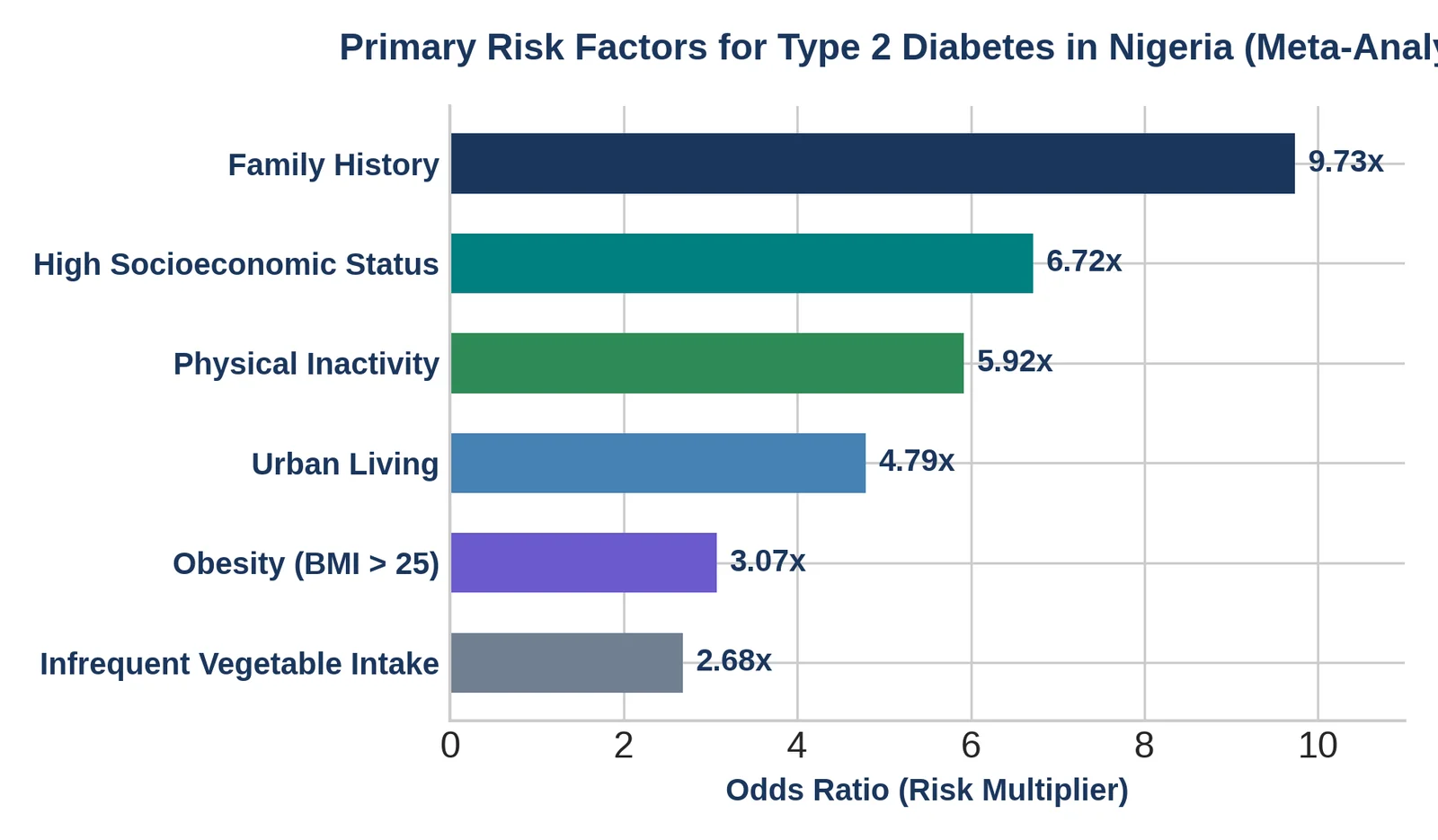
Figure 2: Odds Ratios for prominent risk factors associated with Type 2 Diabetes Mellitus in Nigeria (Olamoyegun et al., 2024).
Genetic Predisposition and Socioeconomic Status
As illustrated in Figure 2, a positive family history of diabetes remains the single strongest individual risk multiplier, increasing diabetes risk by 9.73 times (OR: 9.73; 95% CI: 5.4–10.5) (Olamoyegun et al., 2024). Interestingly, unlike high-income Western countries where T2DM disproportionately impacts lower-income strata, diabetes in Nigeria exhibits a positive association with high socioeconomic status (OR: 6.72). Children and adolescents from higher socioeconomic backgrounds in urban centers frequently have greater access to ultra-processed foods, high-sugar beverages, screen-based entertainment, and motorized transportation.
Urban Living, Diet Transition, and Physical Inactivity
Urbanization in metropolitan centers such as Lagos, Kano, Ibadan, and Port Harcourt has drastically restructured lifestyle patterns. Urban residence is associated with a nearly 5-fold increase in diabetes risk (OR: 4.79) (Olamoyegun et al., 2024). Concurrently, physical inactivity increases risk nearly 6-fold (OR: 5.92), driven by reduction in school physical education programs and increased sedentary screen time. Dietary habits have similarly shifted away from traditional fiber-rich staples toward highly refined carbohydrates and sweetened beverages, with infrequent vegetable consumption yielding a 2.68-fold increased risk.
4. Healthcare Infrastructure and Socioeconomic Burden
The growing prevalence of youth diabetes presents profound challenges to Nigeria's fragile healthcare ecosystem. Managing chronic metabolic conditions in children and young adults requires consistent monitoring, specialist endocrinological care, and uninterrupted access to diagnostic supplies and medications.
High Out-of-Pocket Expenses and Diagnostic Barriers
A major structural bottleneck is the financial burden of diabetes care. Nigeria's National Health Insurance Scheme (NHIS) covers only a fraction of the population and frequently excludes basic consumables such as glucometers, test strips, and specialized analog insulins. Blood glucose test strips, which previously cost 100 NGN, have escalated in cost due to inflationary pressures and currency devaluations, making routine self-monitoring unaffordable for millions of households. Consequently, over 78.7% of diabetes cases in Nigeria remain undiagnosed until late-stage complications manifest (IDF Atlas, 2024).
Clinical Complications in Young Patients
When diabetes onset occurs during adolescence or early adulthood, patients face a lifetime of chronic microvascular and macrovascular risks. Uncontrolled blood glucose leads to premature diabetic nephropathy, retinopathy, neuropathy, and early cardiovascular events. Furthermore, recurrent diabetic ketoacidosis (DKA) among pediatric T1DM patients remains a leading cause of avoidable juvenile mortality in rural tertiary hospitals.
5. Strategic Imperatives & Policy Recommendations
Addressing the rising tide of youth diabetes in Nigeria necessitates multi-sectoral public health strategies spanning legislative reforms, school-based interventions, and primary care integration:
- National School Health Screening Programs: Implement mandatory annual blood glucose and blood pressure screenings in primary and secondary schools to ensure early detection of IFG and IGT before clinical conversion to T2DM.
- Tariff Waivers on Essential Diabetes Supplies: Grant complete import duty and tax exemptions on essential diabetes medications, testing strips, and insulin to reduce landing costs and lower retail prices for families.
- Expansion of Health Insurance Coverage: Mandate universal coverage for essential pediatric and juvenile chronic care consumables under the National Health Insurance Authority (NHIA) scheme.
- Public Nutrition and Physical Activity Policies: Introduce sugar-sweetened beverage (SSB) taxes, enforce clear front-of-pack nutritional labeling, and reintroduce mandatory physical education across Nigerian educational curricula.
Conclusion
The escalating incidence of prediabetes and diabetes among Nigerian adolescents and young adults demands an immediate, coordinated public health response. By shifting focus toward proactive early screening, structural policy reforms, and community-level lifestyle interventions, Nigeria can safeguard the health and economic productivity of its rapidly growing youth population.
References
Akintayo-Usman, N. O., Okanlawon, F. A., & Usman, S. O. (2021). Prevalence of pre-diabetes and risk factors among secondary school adolescents in Osogbo Local Government Area, Osun State, Nigeria. African Health Sciences, 21(3), 1301–1309. https://doi.org/10.4314/ahs.v21i3.41
International Diabetes Federation. (2024). IDF Diabetes Atlas (10th ed. regional update: Nigeria). International Diabetes Federation. https://diabetesatlas.org/data-by-location/country/nigeria/
Musa, A. Z. (2023). School-based study of the prevalence and associated factors of prediabetes among adolescents in Kano State, Nigeria. Nigerian Medical Journal, 64(2), 145–153.
Nri-Ezedi, C. A., et al. (2023). A surge of Type 1 diabetes mellitus among Nigerian pediatric populations: A 12-year multi-center retrospective review. Journal of Tropical Pediatrics, 69(2), fmad012.
Olamoyegun, M. A., Alare, K., Afolabi, S. A., Aderinto, N., & Adeyemi, T. (2024). A systematic review and meta-analysis of the prevalence and risk factors of type 2 diabetes mellitus in Nigeria. Clinical Diabetes and Endocrinology, 10(1), 20. https://doi.org/10.1186/s40842-024-00209-1
Sign in to react.
Speak with verified foreign doctors and other healthcare professionals — within minutes. Vetted professionals abroad, then a vetted partner hospital near you if you need more care.
Consult a doctor nowTake Control
of Your Health
Get access to qualified doctors, personalised health records, and expert care — all from your phone.