
Prostate Health for West African Men: Symptoms, Screening, Treatment and Prevention
Prostate cancer is now the most common cancer in men across West Africa, and most cases are found too late. With Nigeria as the case study, learn the warning signs, when to have a PSA test, how it is treated, and what you can do today.

Introduction
Every West African man who lives long enough will have to think about his prostate. For many it means waking two or three times a night to urinate, or a weak stream that never quite empties the bladder. For tens of thousands of men every year, from Dakar to Lagos to Douala, it means cancer: prostate cancer is now the most common cancer in men across West Africa.
The good news is that most prostate problems are treatable, and prostate cancer found early can usually be cured. The difficulty is that early prostate cancer rarely causes symptoms, so the men who do best are those who talk to a doctor before anything feels wrong.
This guide explains what the prostate is, the conditions that affect it, why men of West African descent face a higher risk, when to get tested, how each condition is treated, and what you can do today. It uses Nigeria, home to about two-thirds of the region's cases, as its case study, but the lessons apply from Senegal to Cameroon and to West Africans living abroad. It is written for men, and just as much for the wives, children and friends who are so often the ones who get a man to see a doctor.
A quick note on spelling: the gland is the prostate. "Prostrate", which you will often hear across the region, means lying face down. Searching with the right spelling brings better information.
What is the prostate?
The prostate is a gland about the size of a walnut that sits just below the bladder, in front of the rectum (back passage). Only men have one. Two facts about its position explain most of the symptoms in this article:
- It wraps around the urethra, the tube that carries urine from the bladder through the penis. When the prostate grows or swells, it can squeeze that tube.
- It sits just in front of the rectum, so a doctor can feel the back of it with a gloved finger during a digital rectal examination (DRE).
The prostate makes part of the fluid in semen, which nourishes and protects sperm. Its growth is driven by male hormones, especially testosterone, which is why some prostate treatments work by lowering or blocking them. It also releases a protein called prostate-specific antigen (PSA) into the blood. The PSA blood test, explained below, is one of the most important tools for checking prostate health.
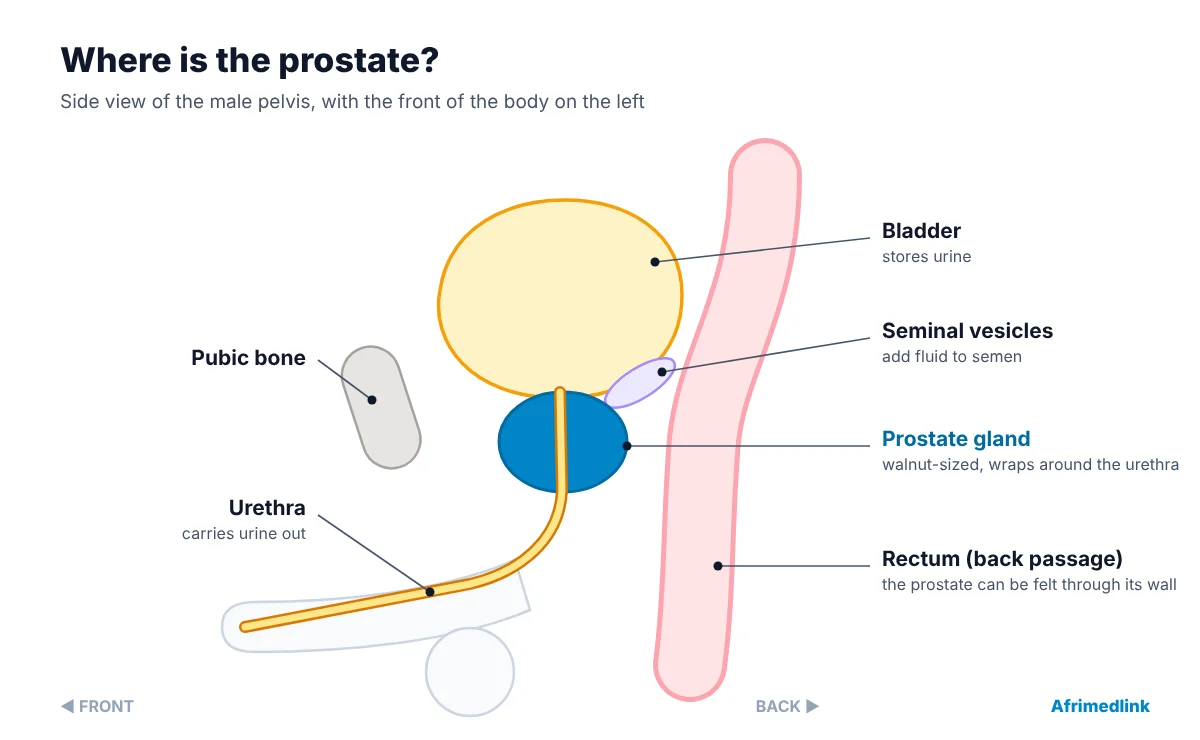 The prostate sits below the bladder and wraps around the urethra. Because it lies just in front of the rectum, a doctor can feel it during a rectal examination.
The three main prostate conditions
They can cause similar symptoms and can exist together, but having one does not mean you have, or will get, another.
1. Enlarged prostate (benign prostatic hyperplasia, BPH)
"Benign" means it is not cancer. The prostate grows slowly throughout life, and after 50 many men's prostates grow enough to press on the urethra. A 2024 community ultrasound study of men aged 44 and over in Cross River State found an enlarged prostate in about one in six of the men examined at its first three sites, becoming more common with age [6].
BPH does not turn into cancer or raise your cancer risk. But it can seriously affect your quality of life, and if ignored for too long it can damage the bladder and kidneys.
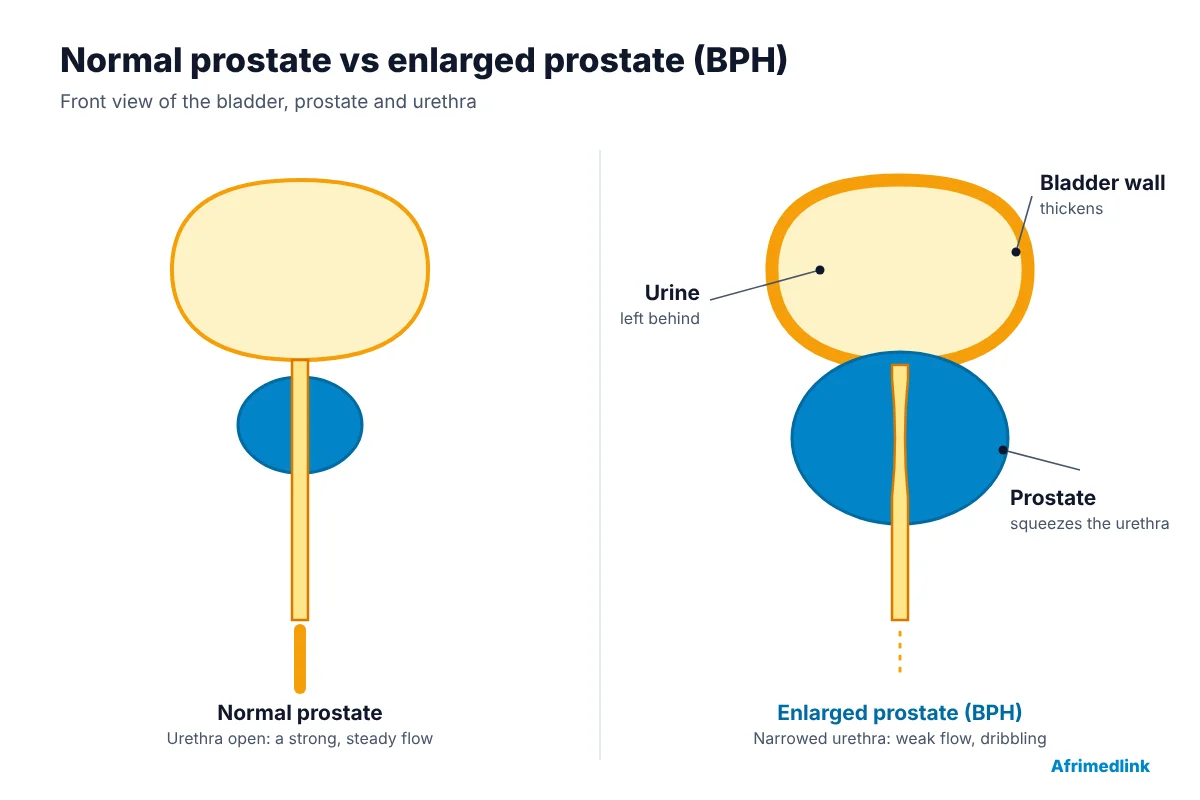 In BPH the enlarged prostate narrows the urethra. The bladder has to work harder, its wall thickens, and urine is often left behind.
2. Prostatitis (inflammation or infection)
Prostatitis can affect men of any adult age, including young men.
- Acute bacterial prostatitis comes on suddenly with fever, chills, burning when passing urine and pain between the scrotum and anus. It needs prompt antibiotics from a doctor.
- Chronic bacterial prostatitis causes repeated urine infections over months.
- Chronic pelvic pain syndrome, the most common type, causes long-lasting pain in the pelvis, groin or genitals, often with no infection found.
Some infections, including sexually transmitted infections, can lead to prostatitis. Prostatitis is not cancer, but it can raise your PSA level.
3. Prostate cancer
Prostate cancer happens when cells in the prostate grow out of control. Many grow slowly and may never cause harm. Others are aggressive and spread, most often to the lymph nodes and bones.
The key challenge: early prostate cancer usually causes no symptoms at all. By the time it causes bone pain, weight loss or urinary problems, it has often already spread.
Prostate cancer in West Africa: the numbers
According to the International Agency for Research on Cancer (GLOBOCAN 2024) [1], prostate cancer is the most common cancer in men across Western Africa:
- 38,354 West African men were diagnosed with prostate cancer in 2024, and 23,849 died of it.
- It made up 31% of all new cancers in West African men, three times the next most common (liver cancer).
- It is the leading male cancer in Nigeria (24,396 cases, 39% of male cancers), Ghana (2,817 cases, 26%) and Côte d'Ivoire (2,632 cases, 31%), and the second in Senegal (1,073 cases) [1].
 Prostate cancer across West Africa in 2024, and where Nigeria sits in it. Source: GLOBOCAN 2024, International Agency for Research on Cancer.
Nigeria: the case study
Nigeria alone accounts for about two-thirds of the region's cases. In 2024, 24,396 Nigerian men were diagnosed and 15,176 died, making prostate cancer the second most common cancer in the country overall, after breast cancer [1].
Compare those two numbers. In countries where most men are diagnosed early, the large majority survive. In Nigeria, as across the region, deaths each year are close to two-thirds of new cases. The biggest reason is late diagnosis, and Nigerian research shows the pattern clearly:
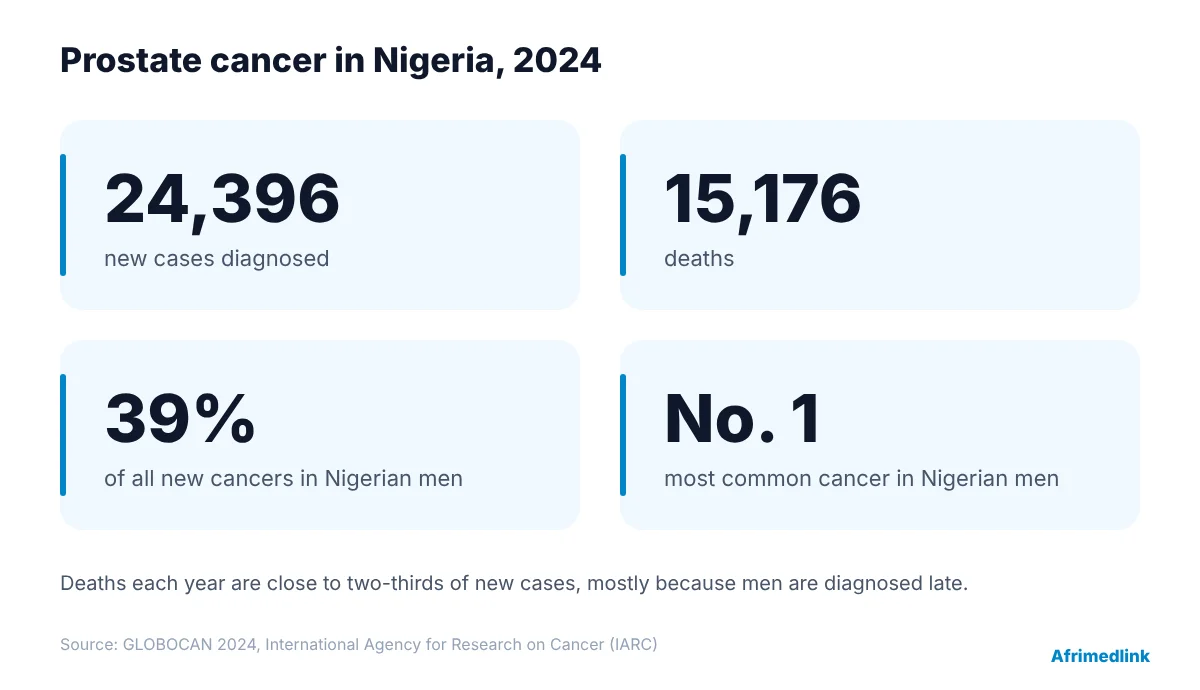 The case study: Nigeria at a glance. Source: GLOBOCAN 2024, International Agency for Research on Cancer.
- A study comparing men treated at National Hospital Abuja with men in Cape Town found that the Nigerian men were diagnosed at a significantly more advanced stage, with higher-risk disease. Two-thirds of the men whose cancer had already spread were Nigerian [4].
- In a survey of 344 men aged 40 and over in Lagos, more than half had poor knowledge of prostate cancer and only about one in five had ever been tested. They cited fear of the result, not knowing where to go, cost, discomfort about the rectal examination and fear of the needle [5].
What is true of Nigeria is true of its neighbours: the same late presentation is reported from Ghana, Senegal and Cameroon, where most men still arrive at hospital with advanced disease. And the problem is set to grow. The Lancet Commission on prostate cancer projects that worldwide cases will more than double, from about 1.4 million in 2020 to around 2.9 million by 2040, with the steepest rises in low- and middle-income countries as more men live into old age [2][3]. West Africa, with its young population now ageing, is exactly where that surge will land.
Why West African men face a higher risk
Men of West African ancestry, whether at home, in the Caribbean, the UK or the US, have some of the highest rates of prostate cancer in the world, and tend to be diagnosed younger and with more aggressive disease. In the United States, Black men, most of whom trace their ancestry to West Africa, die from prostate cancer at roughly twice the rate of white men [7]. Inherited gene variants more common in men of West African ancestry play a part. Late diagnosis and poorer access to care make the gap much worse.
 Some risks come with being a West African man; others are in your hands.
Risk factors you cannot change
- Age. Risk rises sharply after 50, but aggressive cancer can occur in Black men in their 40s.
- West African ancestry. Being a Nigerian, Ghanaian, Senegalese or Ivorian man is itself a risk factor, and it travels with you wherever you live.
- Family history. Your risk is higher if your father or brother had prostate cancer, especially before 65, or if more than one close relative was affected [8].
- Inherited genes. Faults in genes such as BRCA2, also linked to breast and ovarian cancer in women, raise the risk of aggressive prostate cancer. Tell your doctor if women in your family had these cancers young.
Risk factors you can influence
- Body weight. There is strong evidence that being overweight or obese increases the risk of advanced prostate cancer, the kind that kills [11].
- Smoking, which is linked to more aggressive disease and worse outcomes after treatment.
- Physical activity and diet, through their effect on weight and overall health.
Warning signs
Remember: early prostate cancer usually has no symptoms. The signs below are more often caused by BPH or prostatitis than by cancer, but each one deserves a visit to a doctor.
 Which signs can wait for an appointment, which need a doctor within days, and which are an emergency.
Urinary symptoms
- Needing to urinate often, especially at night. Waking three or four times a night is not "normal for your age", and you do not have to live with it.
- A sudden, urgent need to urinate, sometimes with leaking.
- Difficulty starting, or having to strain.
- A weak, slow or stop-start stream, or dribbling at the end.
- Feeling that your bladder has not fully emptied.
See a doctor soon if you have
- Blood in your urine or semen.
- Pain or burning when urinating, especially with fever.
- Pain in the lower back, hips, pelvis or ribs that will not go away.
- Unexplained weight loss or tiredness.
- New difficulty with erections, or pain on ejaculation.
Go to a hospital emergency department immediately if
- You cannot pass urine at all, especially with a painful, swollen lower belly. This is acute urinary retention and usually needs a catheter.
- You have a high fever with pain on urinating and feel very unwell.
- You develop sudden weakness or numbness in your legs, or lose control of your bladder or bowels, especially with back pain. In a man with prostate cancer, this can mean the cancer is pressing on the spinal cord, which needs urgent treatment to prevent paralysis.
Getting tested: who, when and how
From what age?
No West African country has a national prostate cancer screening programme, and international guidelines differ. They agree that men at higher risk, including Black men, should start the conversation with their doctor earlier.
- The Prostate Cancer Foundation (2024) recommends that Black men discuss PSA testing and, if they choose, have a baseline test between ages 40 and 45, then regular tests, often yearly, until at least 70. Men with a strong family history or high-risk genes may start at 40 [9].
- The American Cancer Society advises high-risk men, including Black men and men whose father or brother was diagnosed before 65, to start discussing screening at 45, and men at even higher risk at 40 [8].
- The US Preventive Services Task Force (2018, being updated) advises men aged 55 to 69 to decide individually with their doctor, and asks doctors to tell Black men about their higher risk [7].
In practice, for a West African man: by your early 40s, ask your doctor about a PSA test, or at 40 if your father or brother had prostate cancer. After 70, whether to keep testing depends on your general health.
 A practical timeline for West African men, based on Prostate Cancer Foundation and American Cancer Society guidance for Black men. Your doctor will tailor it to you.
The PSA blood test
The PSA test is a simple blood test. It does not involve a rectal examination. Many men avoid testing because they think the "prostate test" means a finger exam.
Before the test, avoid ejaculation, vigorous exercise, cycling and anal sex for 48 hours, as these can temporarily raise PSA [10]. If you have had a urine infection, wait a few weeks after it clears. Tell the doctor if you take finasteride or dutasteride, which lower PSA readings by about half.
What the result means: there is no single "normal" PSA number. Many laboratories flag results above about 4 ng/mL, but doctors interpret PSA by your age, prostate size, family history and, above all, how it changes over time. A raised PSA does not mean cancer: BPH, prostatitis or a recent infection can all raise it. A small number of cancers occur with a "normal" PSA, which is why your doctor may also examine you.
Benefits and limits. PSA testing finds cancers early, when they can be cured. It can also find slow-growing cancers that would never have caused harm, leading to tests and treatments with side effects (overdiagnosis). For Black men, where the bigger danger is diagnosis that comes too late, experts increasingly argue that the benefits of testing outweigh these harms [9]. The decision is yours to make with your doctor.
Digital rectal examination (DRE)
The doctor gently inserts a gloved, lubricated finger into the rectum to feel the prostate for size, hardness or lumps. It takes less than a minute and should not be painful. You can ask for a chaperone or a male doctor.
If your PSA or examination is abnormal
- Repeat the PSA and rule out other causes, such as an infection.
- MRI scan of the prostate, where available, shows whether there is an area that looks like significant cancer and guides any biopsy. MRI is offered at teaching hospitals and private diagnostic centres in most West African capitals and big cities, including many in Nigeria.
- Biopsy. Small samples are taken with a fine needle, usually under local anaesthetic, and examined under a microscope. This is the only way to confirm cancer.
- Grading. Cancer is given a Gleason score (usually 6 to 10), also reported as an ISUP Grade Group from 1 to 5. Higher means more aggressive.
- Staging. Scans such as a bone scan, CT or PSMA-PET show whether the cancer is confined to the prostate (localised), has grown just outside it (locally advanced) or has spread (metastatic).
 The usual steps from a first test to a diagnosis. A raised PSA does not mean cancer, and many men stop at step 3.
Why early detection changes everything
Stage at diagnosis is the strongest predictor of survival. The most complete long-term data come from the United States, where most cancers are found early. There, five-year relative survival is [12]:
- 100% when the cancer is still inside the prostate (localised)
- 100% when it has reached only the nearby lymph nodes (regional)
- about 40% once it has spread to the bones or other organs (distant).
In other words, men whose cancer is found early have survival close to that of men without cancer. West African data are limited, but with most men in the region diagnosed at the later stage, early testing is the most powerful tool we have to change the numbers.
 Five-year relative survival by stage at diagnosis, United States SEER data, 2016–2022. Cancer found before it spreads is very treatable.
Treatment options
Treatment depends on the condition, how severe it is, your age, your general health and your preferences. Discuss options, side effects and costs with your doctor; for prostate cancer, ideally with a urologist and an oncologist.
Enlarged prostate (BPH)
- Lifestyle changes for mild symptoms: drink less in the two hours before bed, cut down on alcohol and caffeine (coffee, strong tea, cola, energy drinks), avoid constipation, and after urinating wait a moment and try again [13].
- Alpha-blockers such as tamsulosin or alfuzosin relax the prostate and usually improve the flow within days to weeks. They can cause dizziness on standing.
- Finasteride or dutasteride slowly shrink the prostate over months and suit larger glands. They halve your PSA reading, so always mention them.
- Surgery if medicines are not enough or complications develop: transurethral resection of the prostate (TURP), laser procedures or, for very large glands, open prostatectomy, still common across West Africa.
- A catheter to drain the bladder in urinary retention.
Do not self-medicate. "Prostate tablets" bought from a chemist without a diagnosis can mask the symptoms of prostate cancer and delay your diagnosis. Some medicines and herbal mixtures also interact with blood pressure drugs.
Prostatitis
- Bacterial prostatitis: antibiotics prescribed by a doctor, often for two to four weeks or longer. Finish the full course.
- Chronic pelvic pain syndrome: pain relief, alpha-blockers, pelvic floor physiotherapy, warm baths and stress management. Repeated antibiotics rarely help when no infection is found.
Prostate cancer
- Active surveillance for low-risk cancer: regular PSA tests, examinations and MRI, with treatment only if the cancer grows. This is not the same as doing nothing.
- Radical prostatectomy: surgery to remove the prostate when the cancer has not spread.
- Radiotherapy from outside the body or with radioactive seeds placed inside the prostate, often combined with hormone therapy. Radiotherapy centres are few across the region (Nigeria has only about ten working machines for over 230 million people [18], and some countries in the region have one or none), so ask about referral early.
- Hormone therapy lowers testosterone to slow or shrink the cancer, using injections, tablets or an operation to remove the testicles (bilateral orchidectomy). Orchidectomy is widely used across West Africa as a one-time, lower-cost option; discuss its permanence and emotional impact fully first.
- Newer hormone drugs (such as abiraterone or enzalutamide) and chemotherapy (such as docetaxel) for advanced cancer, often extending life considerably.
- Supportive and palliative care: bone-strengthening medicines, radiotherapy for painful bone spots, pain control, and care that keeps men comfortable and living well.
Ask about side effects before treatment. They can include urinary leakage, erection problems, bowel changes after radiotherapy and, with hormone therapy, hot flushes, tiredness, weight gain, low sex drive and thinning bones. Many improve with time or can be treated.
Paying for care: the Nigerian example
Cost is one of the biggest reasons men delay, everywhere in the region. Help exists but has to be asked for. In Nigeria:
- Health insurance. If you are enrolled with the National Health Insurance Authority (NHIA) or a private insurer, check what your plan covers for consultations, PSA tests, scans and surgery.
- NHIA cancer cost-sharing. In 2025 the NHIA announced a 50% subsidy on radiotherapy (up to ₦400,000), plus support for diagnostics such as MRI, CT and histology, and for cancer surgery including prostatectomy, at participating tertiary centres [14].
- The Cancer Health Fund, a federal programme, supports treatment for breast, cervical and prostate cancer at selected centres [15].
- The National Institute for Cancer Research and Treatment (NICRAT) coordinates national cancer control and can point you to designated treatment centres.
These schemes change and have eligibility rules, so ask the oncology or social welfare unit at your nearest teaching hospital or federal medical centre what is currently available. Elsewhere in the region, ask the same question of your national health insurance scheme (Ghana's NHIS, for example, covers prostate cancer treatment at accredited hospitals) and of the oncology unit at the nearest teaching hospital.
Myths and facts
Myth: "Prostate cancer only affects very old men."
Fact: men of West African descent can develop aggressive prostate cancer in their 40s and 50s.
Myth: "If I feel fine, my prostate is fine."
Fact: early prostate cancer usually causes no symptoms.
Myth: "Testing means a finger in the anus."
Fact: the first test is usually a simple blood test. A rectal examination may be added, but it is quick.
Myth: "Too much sex, or too little, causes prostate cancer."
Fact: sex does not cause prostate cancer. Large studies found that men who ejaculate more often have a somewhat lower risk [16], but this is an association, not proof, and no substitute for testing.
Myth: "An enlarged prostate turns into cancer."
Fact: BPH does not become cancer, but you can have both, so BPH symptoms are a good reason to get checked.
Myth: "Herbal mixtures cure prostate problems."
Fact: no herbal product has been shown to cure prostate cancer. Even saw palmetto, the most studied herbal remedy for BPH, did not improve urinary symptoms in a large Cochrane review [17]. Some market and social media remedies can harm the liver or kidneys, and all can delay a diagnosis. Tell your doctor about anything you take.
Myth: "Prostate cancer is a death sentence."
Fact: found early, it is one of the most curable cancers. Even when advanced, treatment can control it for years.
 Six things West African men often hear about the prostate, and what is actually true.
Protecting your prostate: practical steps
No food or supplement guarantees you will never get prostate cancer. These steps lower the risk of its most dangerous forms and protect your heart, kidneys and overall health at the same time.
- Know your family history. Ask male relatives about prostate cancer, and female relatives about breast and ovarian cancer. Share it with your doctor.
- Get tested on time. Have a PSA test and a conversation with a doctor by your early 40s, or from 40 with a family history. Keep a record of every result.
- Keep a healthy weight. Excess body fat, especially around the waist, is linked to advanced prostate cancer [11].
- Move every day. Aim for at least 150 minutes a week of moderate activity such as brisk walking, football, dancing or farm work.
- Eat mainly whole, plant-rich West African foods:
- vegetables such as ugu, efo tete, okra, garden egg, bitter leaf, waterleaf, kontomire and carrots
- fruits such as oranges, pawpaw, guava, watermelon, mango and baobab
- beans, groundnuts, fish and chicken more often than red and processed meat
- tomatoes in your stews; they are healthy, though the evidence that they prevent prostate cancer is inconclusive [11]
- whole grains such as ofada or brown rice, millet, fonio, sorghum and oats
- fewer sugary drinks, fried snacks and processed foods.
- Limit alcohol and do not smoke. Alcohol and caffeine also worsen urinary symptoms.
 Half the plate vegetables and fruit, a quarter beans, fish or chicken, a quarter whole grains.
- Look after your urinary and sexual health. Treat urine infections fully, practise safer sex, and never ignore pain or blood.
- Do not let fear or cost delay you. A consultation costs far less, in money and in life, than treating advanced cancer.
For wives, partners and families
Across West Africa, many men only see a doctor when a wife, daughter or son insists. If you are worried about someone you love, start the conversation gently and make it practical: share this article, offer to book the appointment, go with him, or help with the cost. A PSA test is a routine check, just like a blood pressure test. If anything is found, help him write down questions and attend appointments with him.
For men living with a prostate condition: ask questions until you understand your options, bring someone to important appointments, and talk to other men. Support groups at teaching hospitals, places of worship and cancer charities can help. Feeling low or anxious is common, so tell your doctor if it does not lift. After cancer treatment, keep up with regular PSA tests, which can show a return long before symptoms.
September is Prostate Cancer Awareness Month, a good time to start the conversation, but any day is the right day.
How Afrimedlink can help
On Afrimedlink you can find hospitals near you, book an appointment with a doctor, and keep your test results in your personal health record, so every PSA result is in one place for your next visit. If you have any of the symptoms in this article, or you are 40 or older and have never had a PSA test, book a consultation today.
Key takeaways
- The prostate is a walnut-sized gland around the urethra. BPH, prostatitis and prostate cancer affect it most.
- Prostate cancer is the most common cancer in West African men: over 38,000 new cases and 23,000 deaths in 2024, two-thirds of them in Nigeria [1].
- Early prostate cancer has no symptoms, so waiting for symptoms means waiting too long.
- West African men should talk to a doctor about PSA testing at 40 to 45, or at 40 with a family history.
- A PSA test is a simple blood test. A raised result does not mean cancer, but it needs follow-up.
- Found early, prostate cancer is highly curable.
- Keep a healthy weight, stay active, eat plant-rich meals, avoid smoking, and never let herbal remedies or self-medication delay a diagnosis.
References and further reading
- International Agency for Research on Cancer. GLOBOCAN 2024 fact sheets: Western Africa, Nigeria, Ghana, Côte d'Ivoire and Senegal. Global Cancer Observatory, 2026. Western Africa · Nigeria · Ghana · Côte d'Ivoire · Senegal
- James ND, Tannock I, N'Dow J, et al. The Lancet Commission on prostate cancer: planning for the surge in cases. The Lancet, 2024. doi.org
- International Agency for Research on Cancer. The Lancet Commission on prostate cancer (news release), April 2024. iarc.who.int
- Ahmed RO, Sewram V, Oyesegun AR, et al. A comparison of clinicopathologic features of prostate cancer between Nigerian and South African black men. African Journal of Urology, 2022;28:6. doi.org
- Ugochukwu UV, Odukoya OO, Ajogwu A, Oyewola R. Prostate cancer screening: what do men know, think and do about their risk? Pan African Medical Journal, 2019;34:168. panafrican-med-journal.com
- Esomonu U, Obun C, Ude R, et al. Prevalence of benign prostatic hyperplasia and prostate cancer among suburban residents in Southern Nigeria. African Journal of Urology, 2024;30:66. doi.org
- US Preventive Services Task Force. Prostate cancer: screening (2018; update in progress). uspreventiveservicestaskforce.org
- American Cancer Society. Recommendations for prostate cancer early detection. cancer.org
- Garraway IP, et al. Prostate Cancer Foundation screening guidelines for Black men in the United States. NEJM Evidence, 2024. pubmed.ncbi.nlm.nih.gov
- NHS. PSA testing. nhs.uk
- World Cancer Research Fund. Diet, nutrition, physical activity and prostate cancer. wcrf.org
- National Cancer Institute, SEER Program. Cancer stat facts: prostate cancer. seer.cancer.gov
- NHS. Enlarged prostate. nhs.uk
- NHIA launches cost-sharing initiative to ease cancer treatment. Gazette Nigeria, February 2025. gazettengr.com
- Doctors urge government to establish more cancer treatment centres. AllAfrica, September 2025. allafrica.com
- Rider JR, Wilson KM, Sinnott JA, et al. Ejaculation frequency and risk of prostate cancer: updated results with an additional decade of follow-up. European Urology, 2016. doi.org
- Franco JV, Trivisonno L, Sgarbossa NJ, et al. Serenoa repens for lower urinary tract symptoms due to benign prostatic enlargement. Cochrane Database of Systematic Reviews, 2023. Summary: aafp.org
- Nigerian Cancer Society. "10 radiotherapy machines insufficient for over 200m Nigerians" (interview with Daily Trust), February 2026. allafrica.com
This article is for general health education and does not replace advice from a doctor who knows your medical history. If you have symptoms or concerns, please see a qualified health professional.
Sign in to react.
Take Control
of Your Health
Get access to qualified doctors, personalised health records, and expert care — all from your phone.